Signal routing can be one of the most time-consuming challenges in building an Automated Test System (ATS). When your switching hardware spans multiple modules, platforms, and vendors, writing the software to manage it all can easily become a project in itself. Switch Path Manager (SPM) is designed to solve exactly that problem.
This article explains what SPM does, how it works, and why it can significantly reduce the time and effort required to develop ATS signal routing software.
Key takeaways:
- SPM abstracts complex switching hardware into a simple, path-based programming model
- It supports multi-module, multi-platform configurations out of the box
- Compatible with all major ATE development environments
- Works with both PXI and LXI hardware platforms
- Reduces software development time and ongoing maintenance burden
What Is Switch Path Manager?
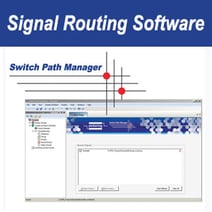
Switch Path Manager is a signal routing software tool developed by Pickering Interfaces. Its core function is to manage the routing of signals through a switching system, regardless of how many modules or chassis that system contains.
In a typical ATS, test engineers must manually track which relays to close across multiple switching modules to establish a signal path between an instrument and a Device Under Test (DUT). This process can be error-prone, difficult to maintain, and becomes exponentially more complex as the system grows.
SPM removes that complexity. You define the system's physical connections once, and SPM handles all pathfinding and relay control from that point forward.
The Core Problem SPM Solves
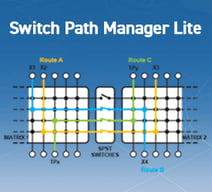
Large switching systems present a specific and well-understood challenge… programming them. When you wire multiple switch matrices together to build a larger composite matrix, each individual module still has its own driver and addressing scheme. The software must account for every relay across every module to establish a single signal path, and, if the system changes or if a module is replaced, the code must be updated.
This creates three compounding problems:
- Programming Complexity: Writing code to manage multi-module paths requires detailed knowledge of every module's internal topology
- Maintenance Burden: Any change to the hardware configuration demands corresponding software changes
- Error Risk: Manually specifying relay states across multiple modules introduces opportunities for signal path conflicts and unintended connections
SPM addresses all three by acting as an abstraction layer between your test application and the switching hardware.
How SPM Works
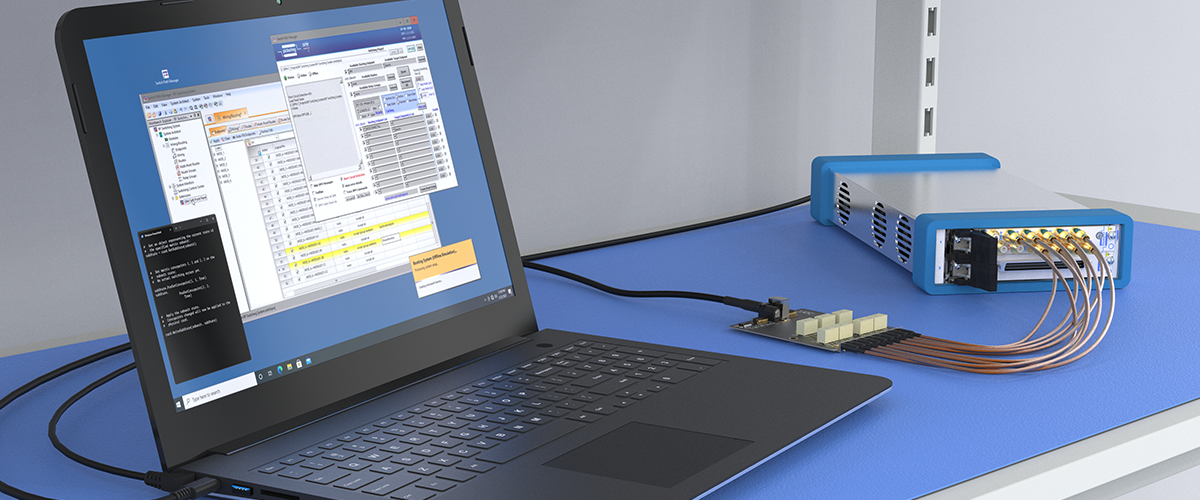
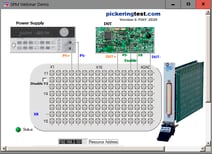
SPM operates on a model of your switching system that you define using its graphical configuration interface. Within this model, you specify:
- The switching modules in the system and their interconnections
- Named endpoints representing instrument connections and DUT test points
- Any path exclusions, such as connections between incompatible signal types
Once the model is built, your test application communicates with SPM using endpoint names rather than relay addresses. SPM calculates the correct path through the system and automatically operates the necessary relays.
Watch the video below to see how SPM simplifies signal path configuration across complex multi-module switching systems and shows how quickly you can move from hardware setup to working test software.
Path-Based Programming
Instead of writing code that says, "close relay 4 on module 2, then close relay 7 on module 5," you write code that says, "connect Instrument_A to DUT_Pin_12." SPM translates that instruction into the correct sequence of relay operations across many modules. This approach keeps your application code clean, readable, and insulated from hardware-level changes.
Automatic Path Calculation
SPM uses the topology information in your system model to calculate valid signal paths. It can identify multiple candidate paths between two endpoints and select the appropriate one based on your configuration. It also enforces the exclusions you define, so a power signal can't accidentally be routed to a sensitive measurement input.
Disconnect and Cleanup
SPM tracks which paths are currently active. When you disconnect a path, SPM releases the correct relays, ensuring the system returns to a known state without requiring the application to manually track relay status.
Platform and Integration Support
SPM is designed to work within the environments that ATS development teams already use. It supports both of Pickering's primary hardware platforms and integrates with all major programming environments.
Supported Hardware Platforms
- PXI and PXIe: SPM works with Pickering's full range of PXI switching modules, including matrix, multiplexer, and RF switching products
- LXI: SPM also supports Pickering's LXI modular chassis, enabling Ethernet-controlled switching configurations
A single SPM model can incorporate both PXI and LXI hardware, which is particularly valuable in hybrid test systems where different platform types serve different signal routing requirements.
Supported Programming Environments
SPM integrates with software development environments used across various industries, including:
- LabVIEW
- LabWindows/CVI
- C and C++
- C#
- Python
- MATLAB
- Visual Basic
This breadth of compatibility means SPM can fit into your existing test software architecture without requiring a change in tools or workflow.
Practical Benefits for ATS Development
The value of SPM is most apparent when you consider the real-world development and maintenance tasks it simplifies.
Faster Initial Development
Defining a switch system model in SPM is significantly faster than writing low-level relay control code from scratch. Once the model is in place, the test application code that drives the switching system is easier to write and verify.
Simpler System Upgrades
When switching hardware changes, such as replacing a module with a higher-channel-count alternative or adding capacity to an existing matrix, you update the SPM model rather than refactoring application code. The endpoint names your application uses remain the same.
Reduced Risk of Signal Path Conflicts
By abstracting relay control behind named paths and enforcing exclusion rules, SPM reduces the likelihood of signal path conflicts in the application software that can damage instruments or DUT hardware. The system model acts as a documented record of the intended switching topology.
Easier Handoff and Long-Term Maintenance
Test systems in defense and aerospace programs often outlive their original development teams. An SPM-based system is easier for a new engineer to understand and maintain because the signal routing logic is defined in a model rather than buried in relay addressing code.
Where SPM Fits in a Typical ATS Architecture
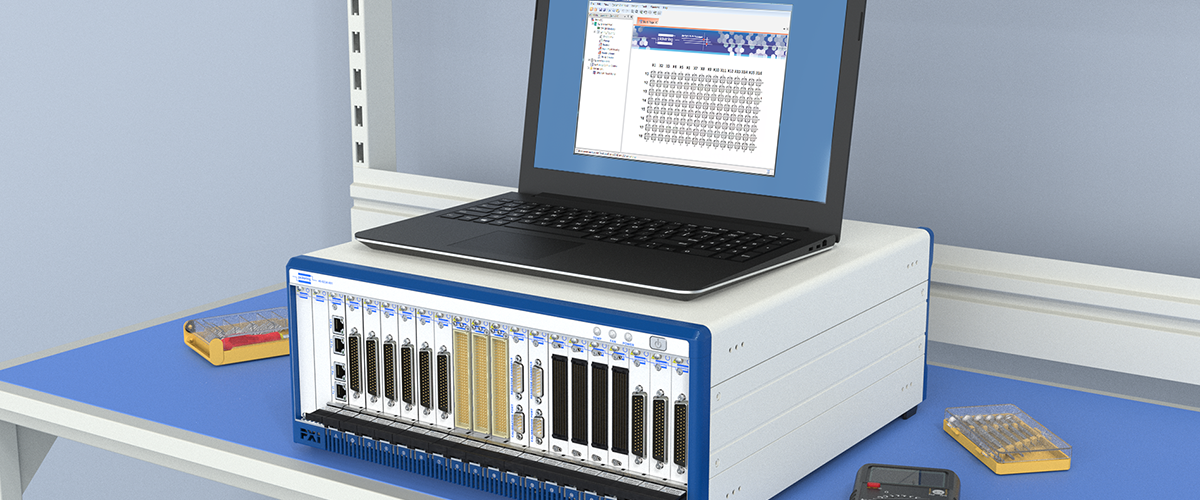
SPM sits between your test executive and your switching hardware. The test executive calls SPM functions to connect and disconnect signal paths. SPM handles all communication with the underlying switch drivers.
This architecture means SPM can be adopted incrementally. If you have an existing test system with manual relay control code, you can introduce SPM for new functionality without rewriting everything at once.
SPM is also compatible with Pickering's IVI switch drivers, enabling it to work alongside the interchangeable instrument architecture that many ATS programs require.
Common Misconceptions
A few assumptions about signal routing software are worth addressing directly.
"We can manage the routing logic in our test executive." This is true for simple systems, but it doesn't scale. As switch complexity grows, inline routing logic becomes a maintenance liability. SPM keeps that logic in a dedicated, maintainable model.
"SPM only works with Pickering hardware." SPM is optimized for Pickering switching modules, but its path-based model supports any hardware for which a compatible driver exists within the supported platforms.
"Setting up the system model is as much work as writing the code manually." The initial model setup does require time, but it's a one-time task. Every subsequent change or addition to the system is faster to implement in SPM than in hand-written relay control code.
Conclusion
Switch Path Manager delivers a practical, reliable approach to one of the most persistent challenges in ATS development: managing complex signal routing across multi-module switching systems. By abstracting relay-level control behind a path-based model, SPM reduces development time, lowers maintenance overhead, and decreases the risk of errors that can compromise test integrity.
For test engineers working in defense, aerospace, or any application where switching system complexity is a real constraint, SPM is a tool worth evaluating.
Explore Switch Path Manager and download a free trial
RELATED RESOURCES: